


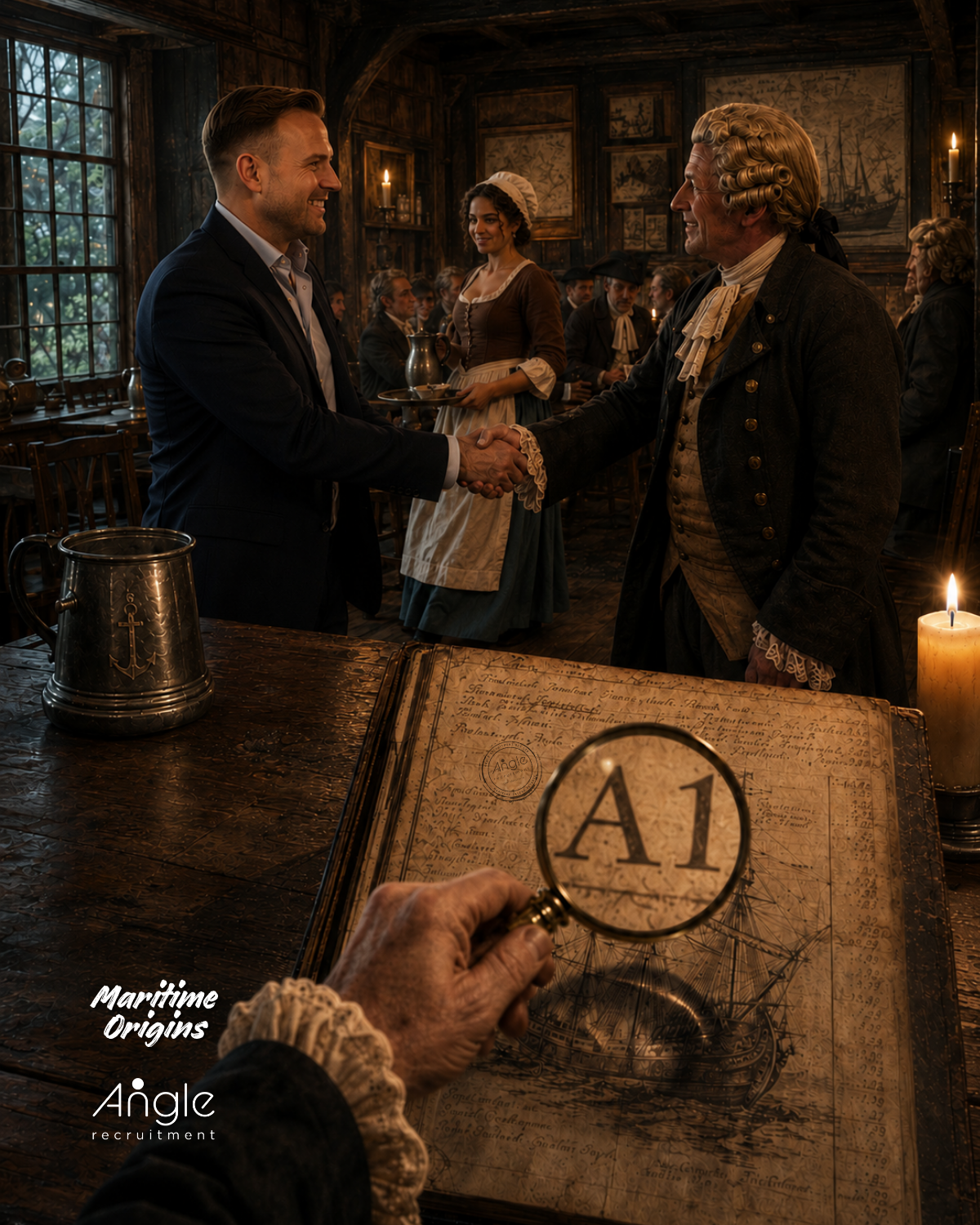
A1: Today, a boast. Before, a survey.
A client told me our shortlist was “A1” this week… “pure class” he said.
He had no idea he was quoting a ship surveyor from the 1700s.
So where does A1 actually come from?
⚓️
London, 1680s. Edward Lloyd's coffee house.
Captains, merchants and underwriters swapping gossip about ships over terrible coffee.
In time, they set up a Register Society to survey and grade the ships properly.
And the gossip became a book…
📗 Lloyd's Register of Shipping.
Every vessel in it was graded.
🚢 A letter for the hull: A, E, I, O or U.
⚓️ A number for the gear: 1, 2 or 3.
A1 meant:
First class hull. First class equipment.
The best ship money could insure.
Underwriters bet their fortunes on those two characters.
By 1837 it had jumped ashore, into Dickens' Pickwick Papers, where a champion drinker got branded 'A, 1'.
The public took to it. From ship's condition to best in class.
⚓️
For nearly 70 years, Lloyd's had the market to itself.
Then every maritime nation built its own register.
1828: Bureau Veritas, Antwerp then Paris.
1861: RINA, Genoa. Italy.
1862: American Bureau of Shipping.
1864: Det Norske Veritas, Norway.
1867: Germanischer Lloyd, Germany.
1899: ClassNK (Nippon Kaiji Kyokai), Japan.
A1 was never a boast. It was a survey.
Someone climbed through the bilges and checked.
Next time you hear something described as 'A1'…
Check the hull. 🤣
🫡 Angle Recruitment... Your register for maritime talent.
Fun Facts
⚓️ A1 nearly didn't survive.
Owners and underwriters spent thirty years in rival registers, feuding until both nearly went bust.
They merged in 1834, and A1 stuck.
⚓️ The 20th century brought:
1968: IACS, the umbrella body that ties them together.
1913: Russian Register
1936: Polish Register of Shipping
1949: Croatian Register of Shipping
1956: China Class Sociey
1960: Korean Register
1975: Indian Register of Shipping
⚓️ It’s still there today.
- Every classed ship carries A1 inside her notation.
- Though the “1” now only covers the anchors and mooring gear. Everything else got its own certificate.
- And a ship that doesn’t need an anchor is classed 100AN. Sound as a pound. Nothing holding her.
Maritime Origins is a weekly storytelling series exploring the sea-born origins of phrases we still use on land, along with the lesser-known stories, legends and characters that shaped maritime culture.
Created by Jason Nangle, founder of Angle Recruitment, a global maritime recruitment and executive search firm.
New episode every Tuesday on LinkedIn. Also on Instagram, YouTube and Facebook.
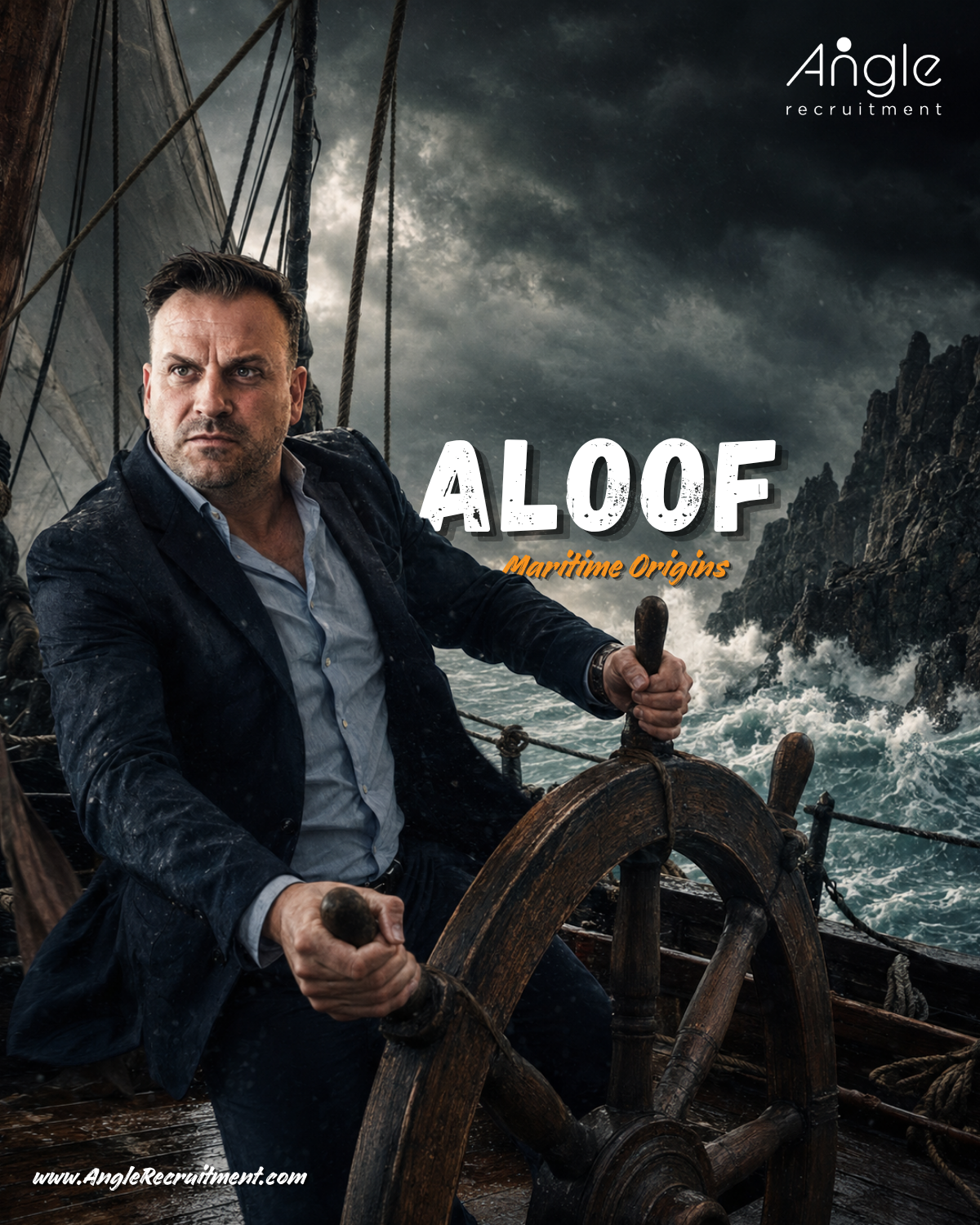
Aloof began as a Tudor helm order to keep a ship's head to windward and clear of a lee shore. How a lifesaving steer became a snub. Maritime Origins.
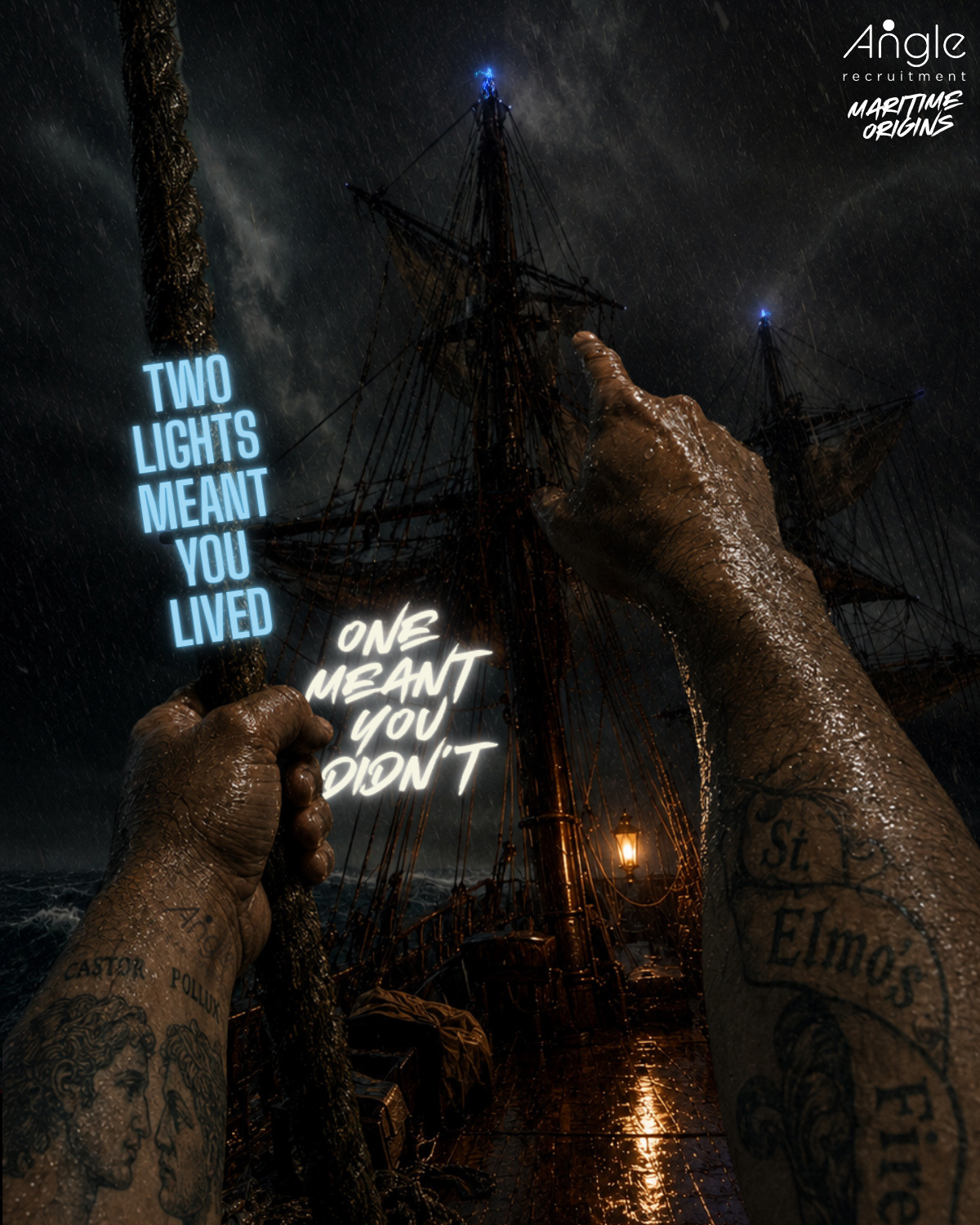
The mast glows blue. No heat, no flame, just tension in the air. Once a sign from the gods, now called St Elmo’s Fire. Still enough to unsettle any crew.

After the Benlomond sank in 1942, Poon Lim spent 133 days alone on a life raft, surviving through ingenuity, resourcefulness and extraordinary determination.