


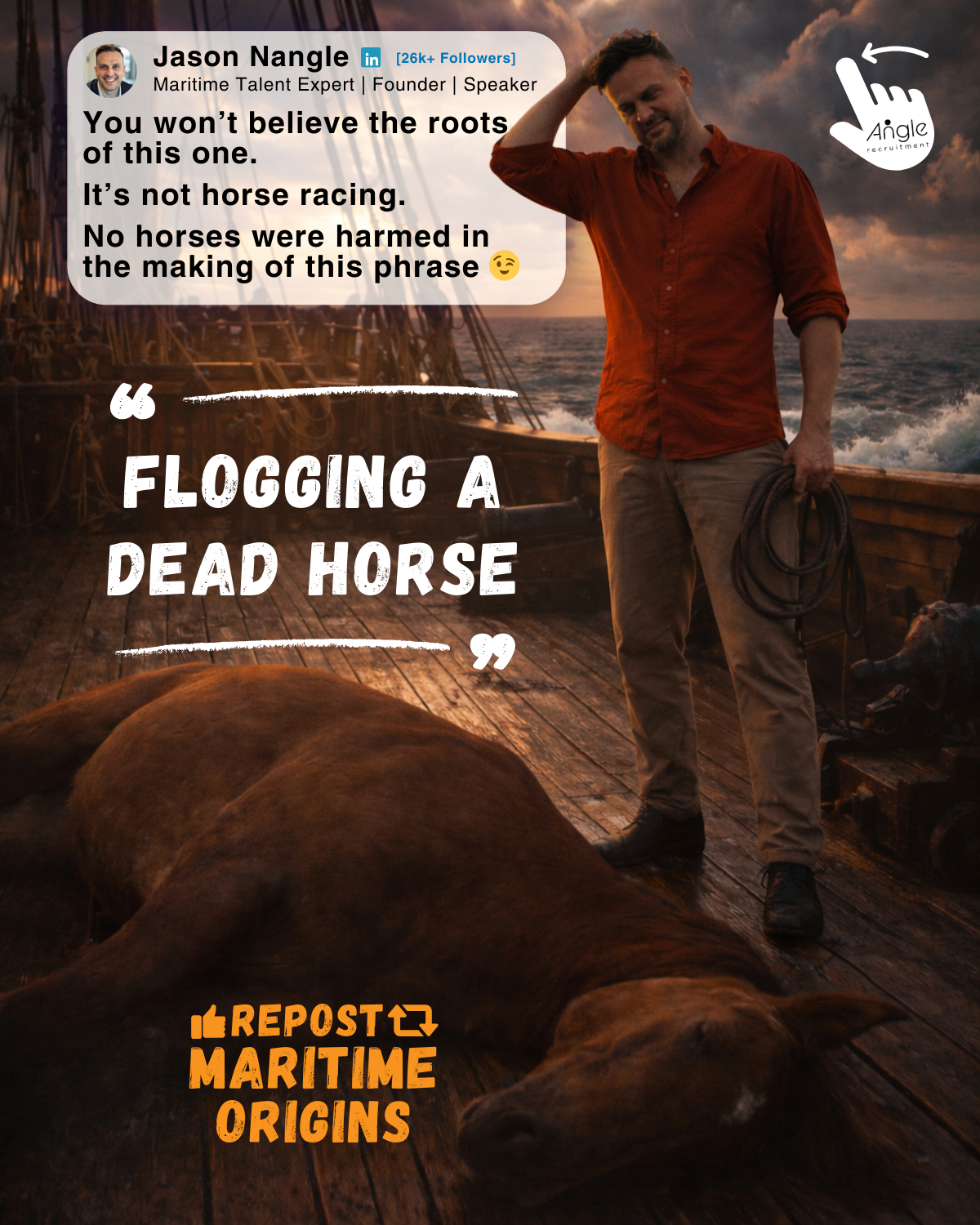
Flogging a Dead Horse
📆 Rewind three hundred years.
The phrase “flogging a dead horse” was born.
💰 Shipowners would gladly lock in crew by paying a month’s wages in advance.
🐴 That first month at sea was called the “dead horse”.
They were working off a debt.
😩 So trying to squeeze extra effort out of them,
was like flogging a dead horse.
🥳 At the end of that first month, crews held a “dead horse” ceremony.
🔥 They made a straw horse effigy, paraded it, often set it alight…
🎵 Then dropped it overboard while singing a sea shanty called “Dead Horse”.
😮💨 That marked the moment the advance had been worked off.
Real earning began.
Fun Fact
Want to hear that sea shanty? It even features in the hit game, Assassin’s Creed 4: Black Flag 🏴☠️
The Maritime Origins Series
Maritime Origins is a storytelling series created by Jason Nangle, Founder of Angle Recruitment, a global maritime recruitment and executive search firm.
The series explores the fascinating history behind everyday phrases that originated at sea, as well as the remarkable stories, traditions and characters that have shaped maritime culture.
Many sayings still used today were first spoken by sailors navigating the challenges of life on board ships. Alongside these phrase origins, the series also highlights lesser-known maritime stories, legends and historical moments from the world of shipping.
Through short stories and visual posts, Maritime Origins connects the language, heritage and traditions of seafarers with the modern maritime industry.
New posts in the series launch every Tuesday on LinkedIn and are then shared across other platforms including Instagram, YouTube, TikTok and X. Follow
Jason Nangle on LinkedIn and Angle Recruitment across your preferred social platforms.

The golden rivet: the shipyard wind up that sent every new hand into the bilges, the Royal Navy's ruder version, and the hidden talent recruiters actually find.
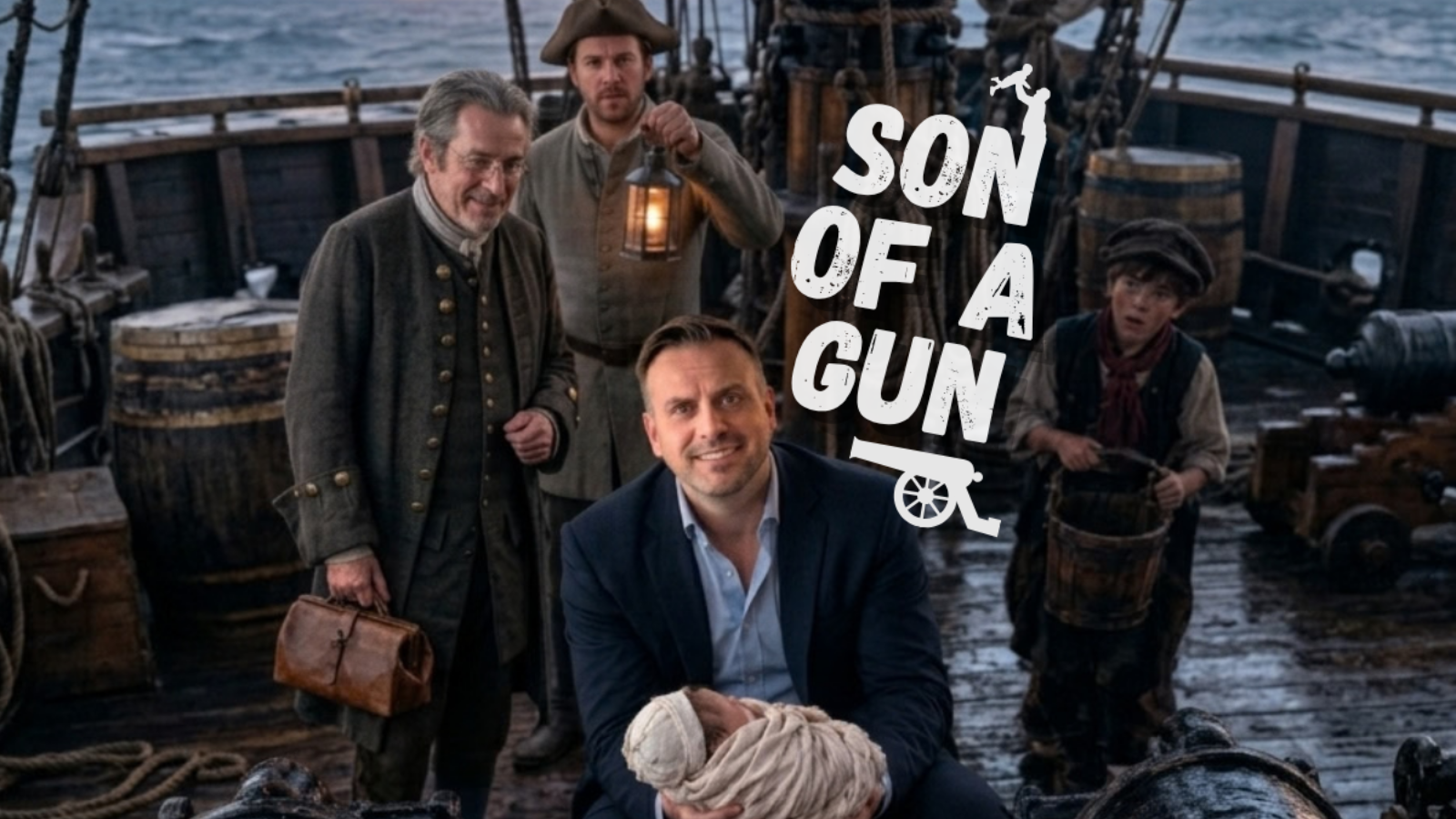
Where "son of a gun" really comes from: babies born between the cannons on Royal Navy gun decks. The history, the fun facts and why it now means grit.
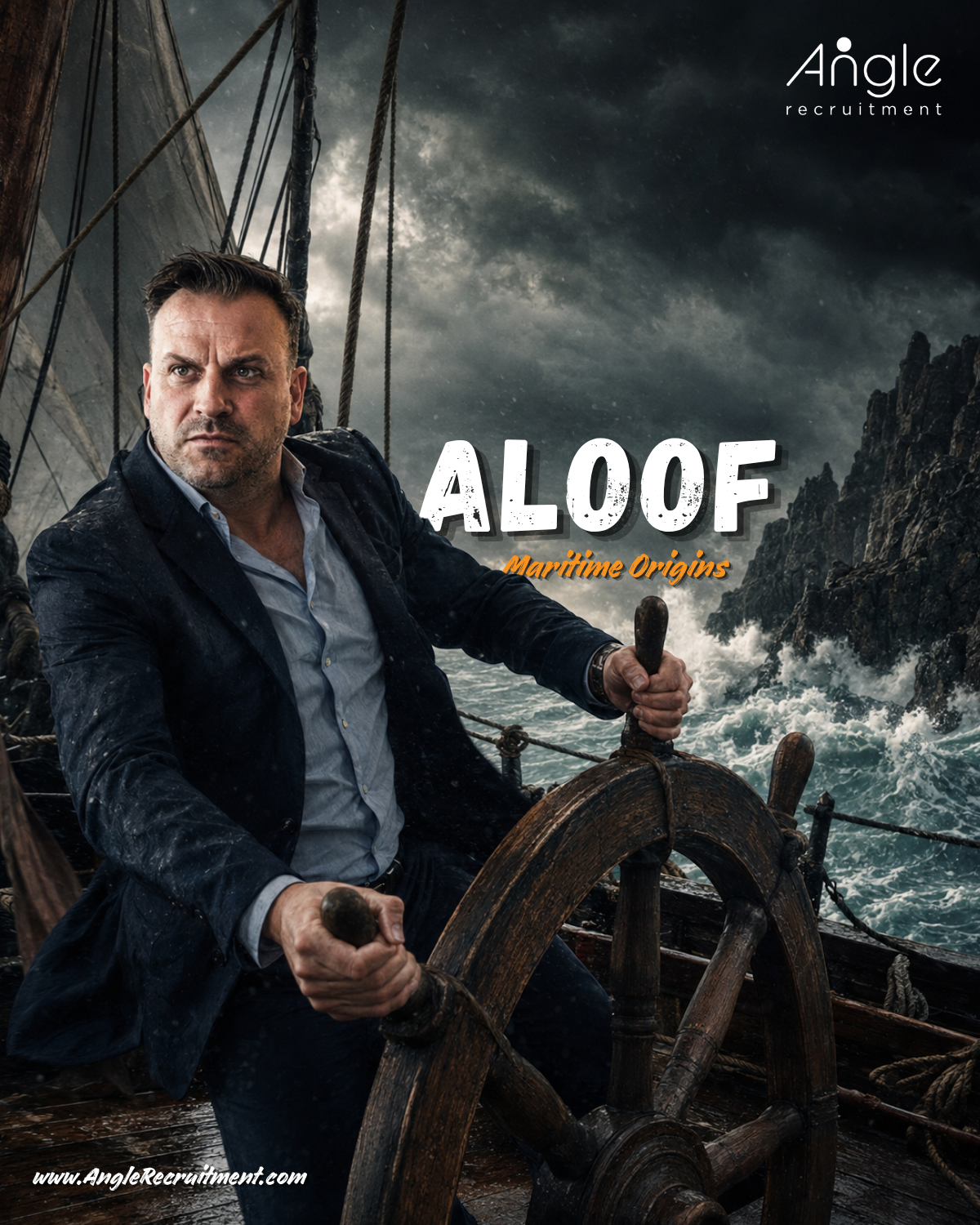
Aloof began as a Tudor helm order to keep a ship's head to windward and clear of a lee shore. How a lifesaving steer became a snub. Maritime Origins.