


Fly By Night:
From Witches to Night Watches
It was Darren's round. Then he was gone.
An empty stool, a full pint, and his mates left holding the tab.
Darren was a “Fly By Night”.
1700s: The phrase was born ashore, and not kindly.
It was an insult aimed at women accused of being witches…
Flying off into the dark on a broomstick.
1800s: the phrase took the modern day meaning…
😲 The tenant who's long gone by rent day.
🤔 The candidate who ghosts the job offer.
😫 The one in the loo when the bill lands.
From witches to night watches, the phrase drifted to sea.
Sailors gave the name to a big light sail for running downwind.
The kind you could set and leave to fly through the night on its own.
The phrase fit the behaviour, so aboard it came.
Happy 50th Darren Nangle. Good to be home to celebrate it with you.
I left your present behind the bar, you little witch 😉.

Fun Facts
💡 The phrase first appears in print in a book of rude words.
Francis Grose's 1796 Classical Dictionary of the Vulgar Tongue lists "fly-by-night" as an insult for a woman, on the old witch idea. The money dodging meaning we use now didn't take over until the 1800s.
💡 Its cousin is still in use today.
A "moonlight flit" is a tenant loading the cart and slipping off after dark to escape the rent. Same crime, same darkness, different phrase.
💡 The insult had quite a career.
From witch slur, to debtor, to a downwind sail, to a 1975 Rush album, and even a 2014 Off-Broadway musical. Few insults have aged so well.
Maritime Origins is a weekly storytelling series exploring the sea-born origins of phrases we still use on land, along with the lesser-known stories, legends and characters that shaped maritime culture.
Created by Jason Nangle, founder of Angle Recruitment, a global maritime recruitment and executive search firm.
New episode every Tuesday on LinkedIn. Also on Instagram, YouTube and Facebook.
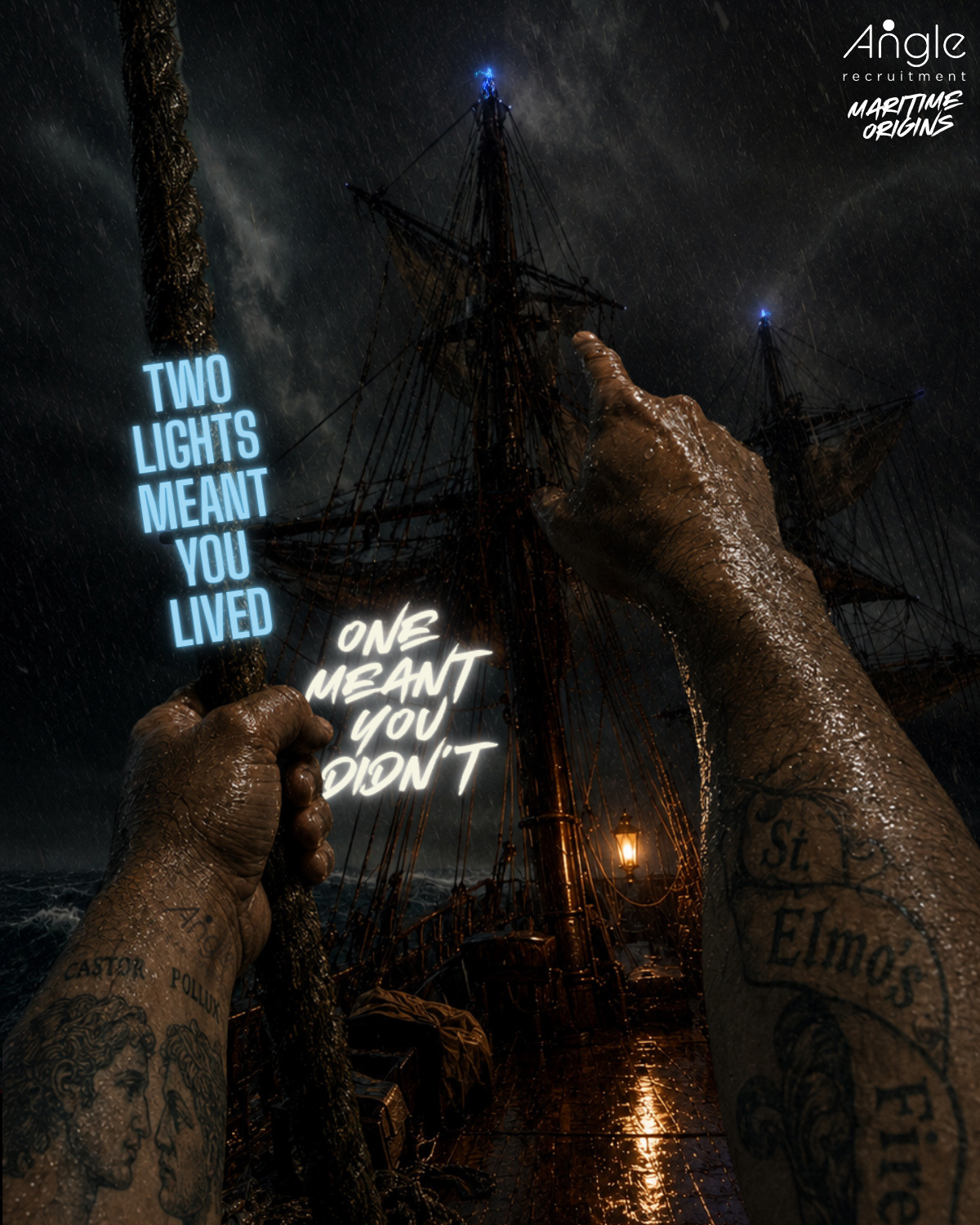
The mast glows blue. No heat, no flame, just tension in the air. Once a sign from the gods, now called St Elmo’s Fire. Still enough to unsettle any crew.

After the Benlomond sank in 1942, Poon Lim spent 133 days alone on a life raft, surviving through ingenuity, resourcefulness and extraordinary determination.

A1 wasn't always a boast, it started as a ship survey at Lloyd's coffee house in the 1680s. Discover how two characters became shorthand for the best today.