


Yacht:
Dutch Menace Turned Rich Man's Toy
That gleaming superyacht in Monaco started life hunting pirates 🏴☠️
And yes, before you ask, it's the Dutch again.
They're bloody everywhere in this #MaritimeOrigins series!
"Yacht" comes from "jacht." Short for "jachtschip."
A hunting ship. For catching pirates.
🇳🇱 1600s. The Dutch built them fast, light and shallow, perfect for running down pirates and smugglers in their coastal waters. Not luxury. A weapon.
Then it went soft.
🏴 1660. The Dutch gave Charles II a yacht, the Mary (as in the image), to mark his return to the throne.
He loved it. Raced it. The English aristocracy wanted in.
Within a generation, the pirate hunter was a rich man's toy.
So the word drifted… From the hunt, to the harbour, to the holiday.
Fun Facts
🔔 In modern Dutch "jacht" means both a hunt and a yacht, depending on context.
"De jacht" can be the hunting party in the woods or the boat in the harbour.
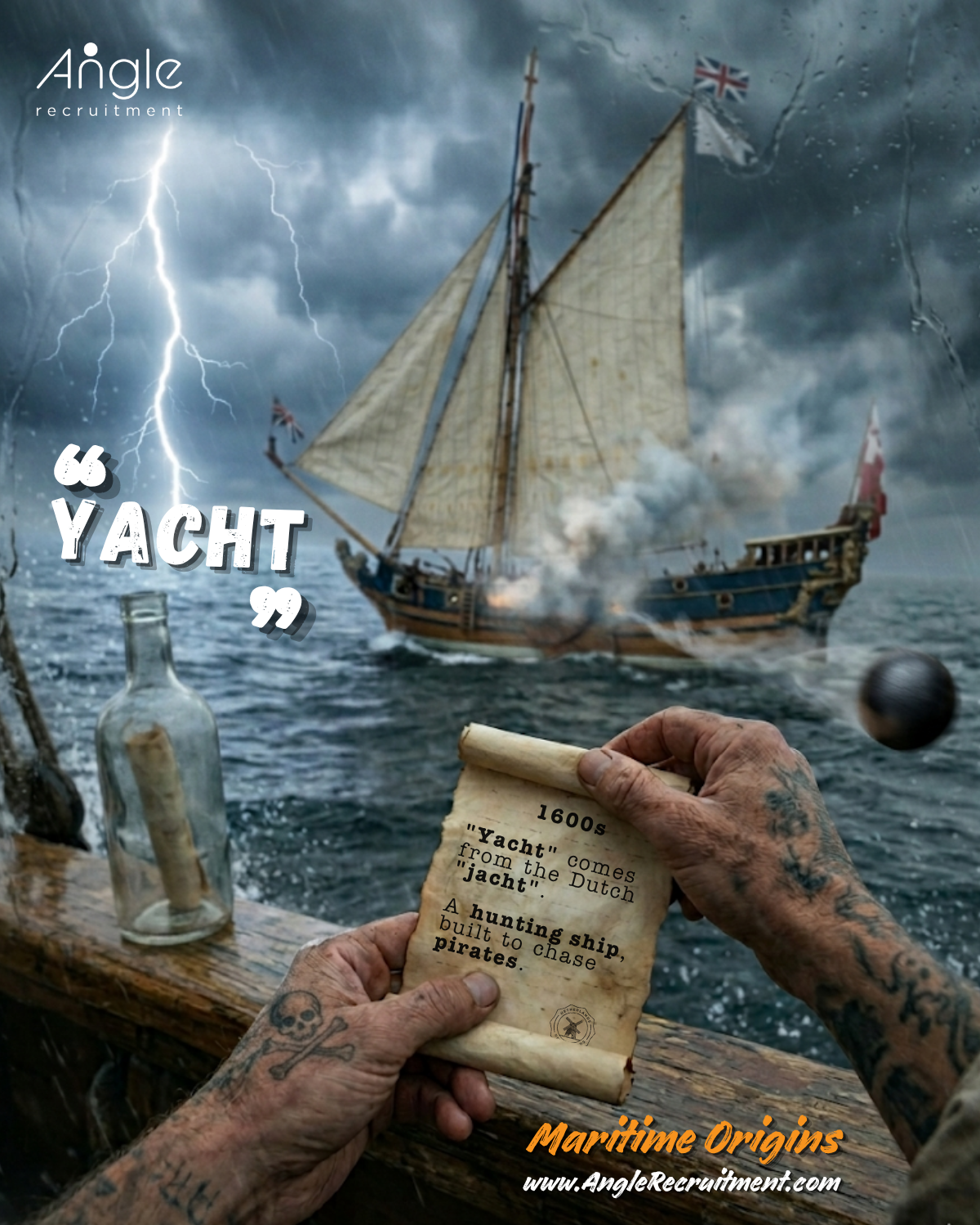
🔔 The first yacht race in England was a royal grudge match.
In 1661 Charles II raced his own brother James down the Thames from Greenwich to Gravesend and back, for a hundred pound wager. The king lost the first leg and won the return. Sibling rivalry, settled on the water.
🔔 The America's Cup is older than the modern Olympics.
First won in 1851 by the schooner America, it's the oldest international sporting trophy in the world, predating the modern Games by 45 years. The Cup is named after the boat, not the country.
🔔"Yacht" is one of the most misspelt words in English, and you can blame the Dutch.
That silent "ch" is a leftover from "jacht," which is why it trips up just about everyone who hasn't seen it written down.
Maritime Origins is a weekly storytelling series exploring the sea-born origins of phrases we still use on land, along with the lesser-known stories, legends and characters that shaped maritime culture.
Created by Jason Nangle, founder of Angle Recruitment, a global maritime recruitment and executive search firm.
New episode every Tuesday on LinkedIn. Also on Instagram, YouTube and Facebook.
The golden rivet: the shipyard wind up that sent every new hand into the bilges, the Royal Navy's ruder version, and the hidden talent recruiters actually find.
Where "son of a gun" really comes from: babies born between the cannons on Royal Navy gun decks. The history, the fun facts and why it now means grit.
Aloof began as a Tudor helm order to keep a ship's head to windward and clear of a lee shore. How a lifesaving steer became a snub. Maritime Origins.