

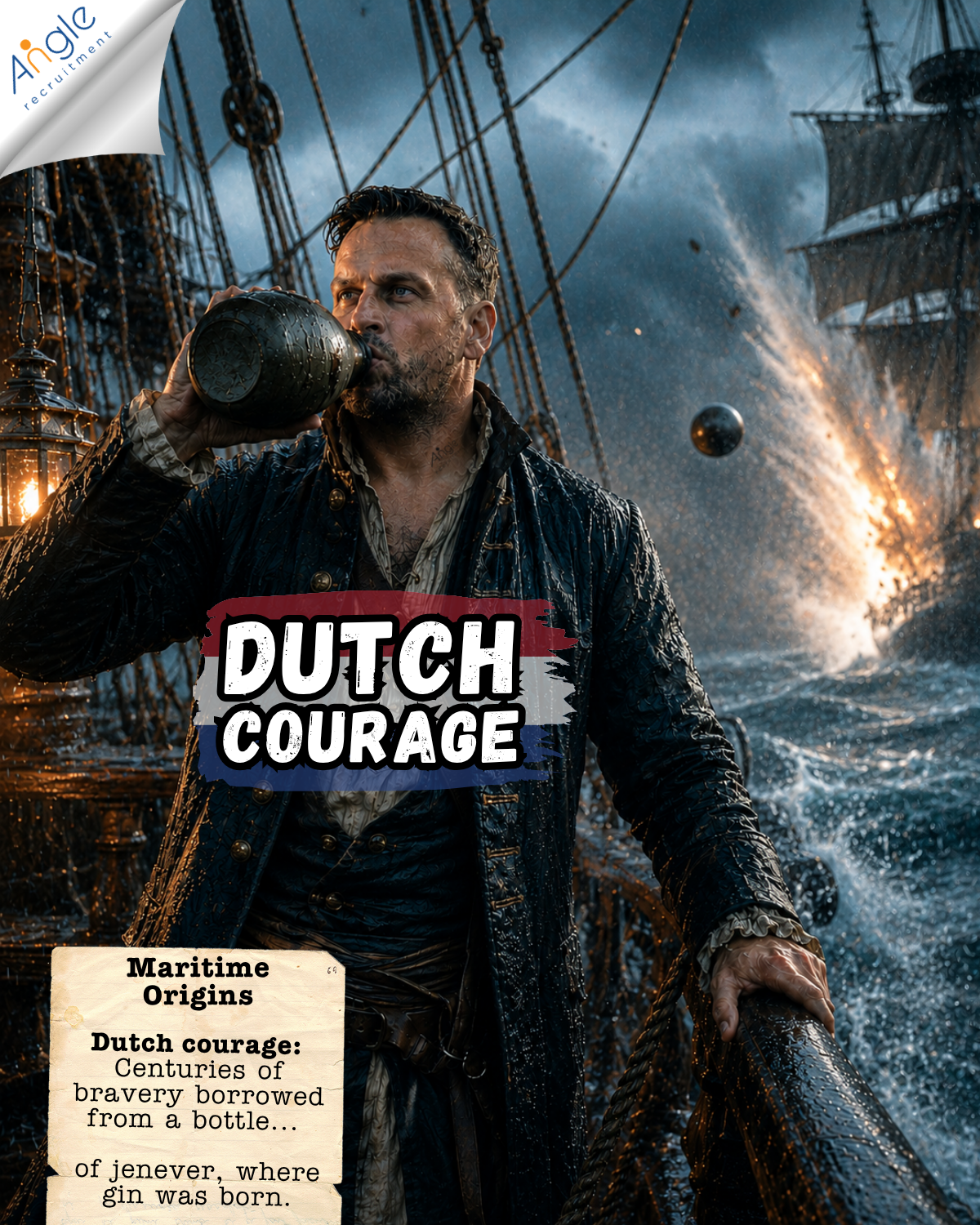

Dutch Courage:
Bravery Borrowed From a Bottle
Almost nobody knows this phrase started on a warship.
1580s. English soldiers helping the Dutch fight Spain spotted something.
Before battle, their Dutch allies downed jenever, the spirit gin was born from.
Not for the taste…. but for the nerve.
The English shipped it home, shortened jenever to gin, and made it their own.
Cue the Gin Craze, fuelled by a tax on French brandy.
So far, so flattering to the Dutch. Then they became the enemy.
1652. The Anglo-Dutch Wars begin, both sides slugging it out at sea.
The English slapped "Dutch" on anything worth mocking.
"Dutch courage" was the jab: bravery from a bottle.
English and later American speakers kept reaching for "Dutch" as an insult for the next two centuries.
"Going Dutch": split evenly.
"Dutch treat": your treat, your bill.
"Dutch uncle": not kind, just blunt.
I recruit in maritime, so I hear plenty about Dutch courage before a big interview.
Coffee tends to do the job these days. An Irish one when all else fails!
Big shout out to the Dutch, a serious seafaring nation that gave English far more than gin.
Half our sea words came from them too.

Fun Facts
🔔 Maelstrom, from the Dutch maalstroom.
A tidal current so powerful, so relentless…
it could engulf vessels in its whirlpool.
🔔 The Dutch avast is traced to houd vast = hold fast.
🔔 More words the maritime industry inherited from the Dutch.
Yacht, from jacht. Skipper, from schipper. Deck, from dek. Dock, from dok. Freight, from vracht. Iceberg, from ijsberg. Caboose, from kombuis, the ship's galley.
Maritime Origins is a weekly storytelling series exploring the sea-born origins of phrases we still use on land, along with the lesser-known stories, legends and characters that shaped maritime culture.
Created by Jason Nangle, founder of Angle Recruitment, a global maritime recruitment and executive search firm.
New episode every Tuesday on LinkedIn. Also on Instagram, YouTube and Facebook.
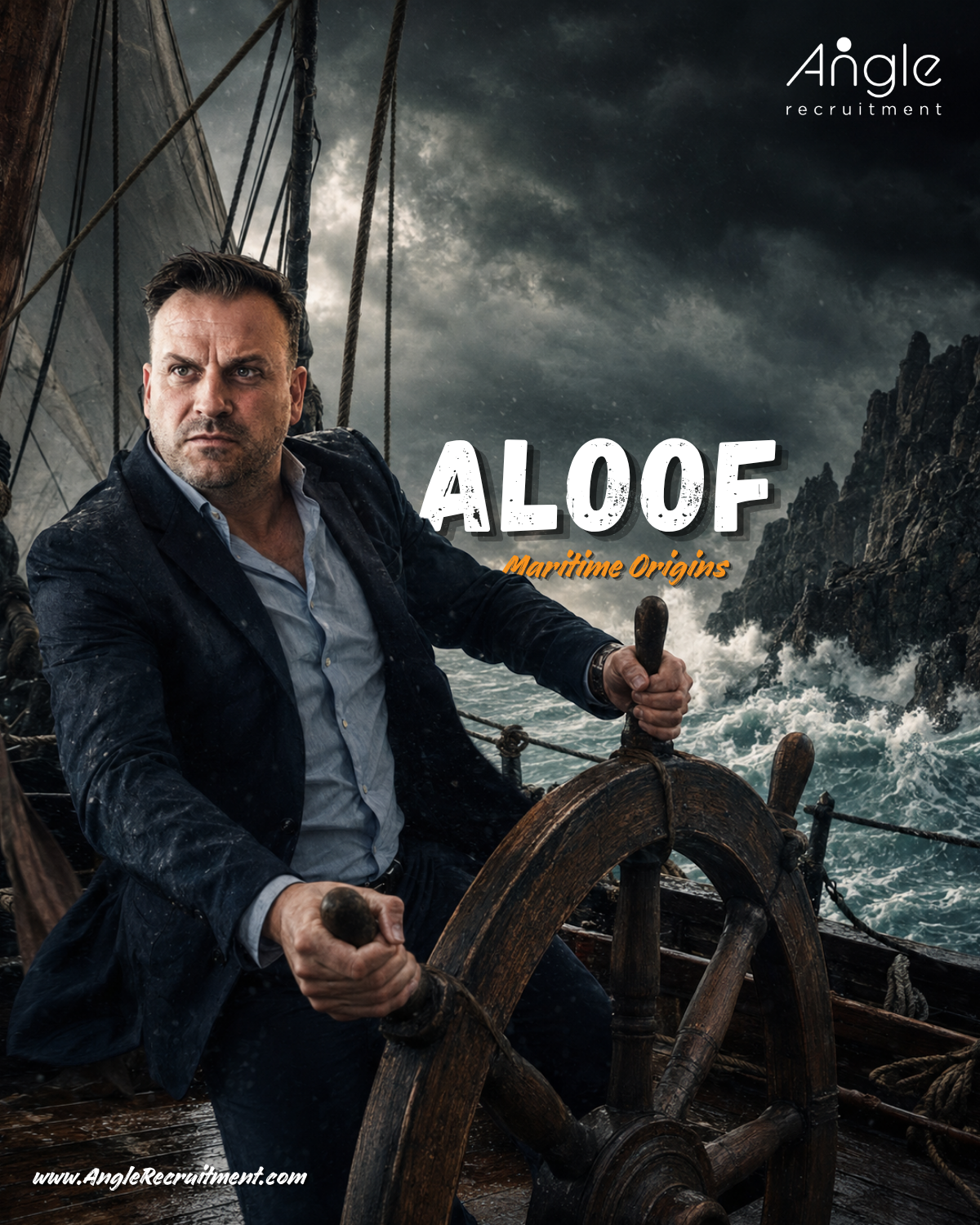
Aloof began as a Tudor helm order to keep a ship's head to windward and clear of a lee shore. How a lifesaving steer became a snub. Maritime Origins.
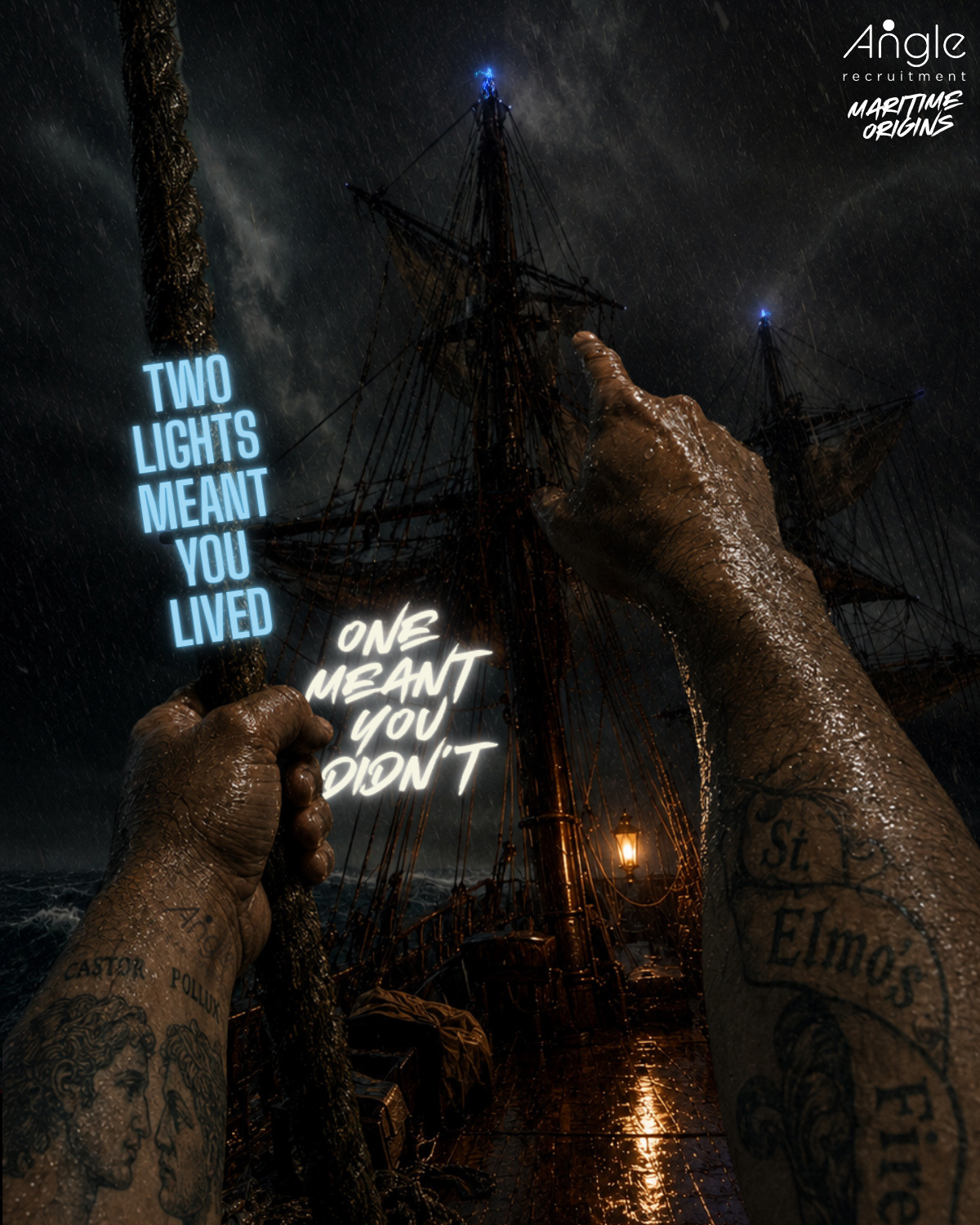
The mast glows blue. No heat, no flame, just tension in the air. Once a sign from the gods, now called St Elmo’s Fire. Still enough to unsettle any crew.

After the Benlomond sank in 1942, Poon Lim spent 133 days alone on a life raft, surviving through ingenuity, resourcefulness and extraordinary determination.