


Sailing Close to the Wind
You've probably heard the phrase used to describe:
🤣 A comedian who almost didn't get away with it.
💰 An expense claim that raised an eyebrow.
🫡 A diplomat saying the quiet part out loud.
"That comment sailed close to the wind"
But it's a maritime phrase, thousands of years old.
No sailing vessel can sail directly into the wind.
The closer a ship can point toward it and still move forward, the less it has to zig-zag (tack) to reach an upwind destination.
Point too high, the sails flap, the ship slows.
Push it further and you're caught "in irons”… drifting backwards.
(More on that one another day.)
The "close" has changed dramatically over the centuries:
📆 Square sails (pre-15th century): 70-80° off the wind.
Brilliant downwind (sailing "large"), hopeless upwind (sailing "by").
The origin of "by and large."
📆 Triangle sails (15th-17th century): 55-60°.
The Caravel made the Age of Discovery possible.
Magellan, Columbus, Cook - all of them.
📆 Modern racing yachts (20th century onwards): 30-35°.
Deep keels, sharp angles, serious speed.
The phrase aged well.
Still in regular use - in business, politics, and journalism.
Especially when someone's operating right in the grey area.

Fun Facts
🔔 The Portuguese Caravel didn't just sail faster - it changed world history.
Before triangular sails, European ships couldn't reliably sail home against prevailing winds. Exploration was a one-way bet.
The Caravel could point closer to the wind, so explorers could actually come back. No Caravel, no Age of Discovery. No Columbus, no Magellan, no global trade as we know it.
🔔 The ship's bell is considered the soul of the vessel.
The bell is the one thing that's preserved. They're frequently gifted and many end up in churches as baptismal fonts. A naval tradition for sailors' children, with the child's name later engraved on the bell itself.
🔔 "By and large" gets used dozens of times a day in business meetings. Almost no one knows it's 500-year-old sailing language.
Maritime Origins is a weekly storytelling series exploring the sea-born origins of phrases we still use on land, along with the lesser-known stories, legends and characters that shaped maritime culture.
Created by Jason Nangle, founder of Angle Recruitment, a global maritime recruitment and executive search firm.
New episode every Tuesday on LinkedIn. Also on Instagram, YouTube and Facebook.
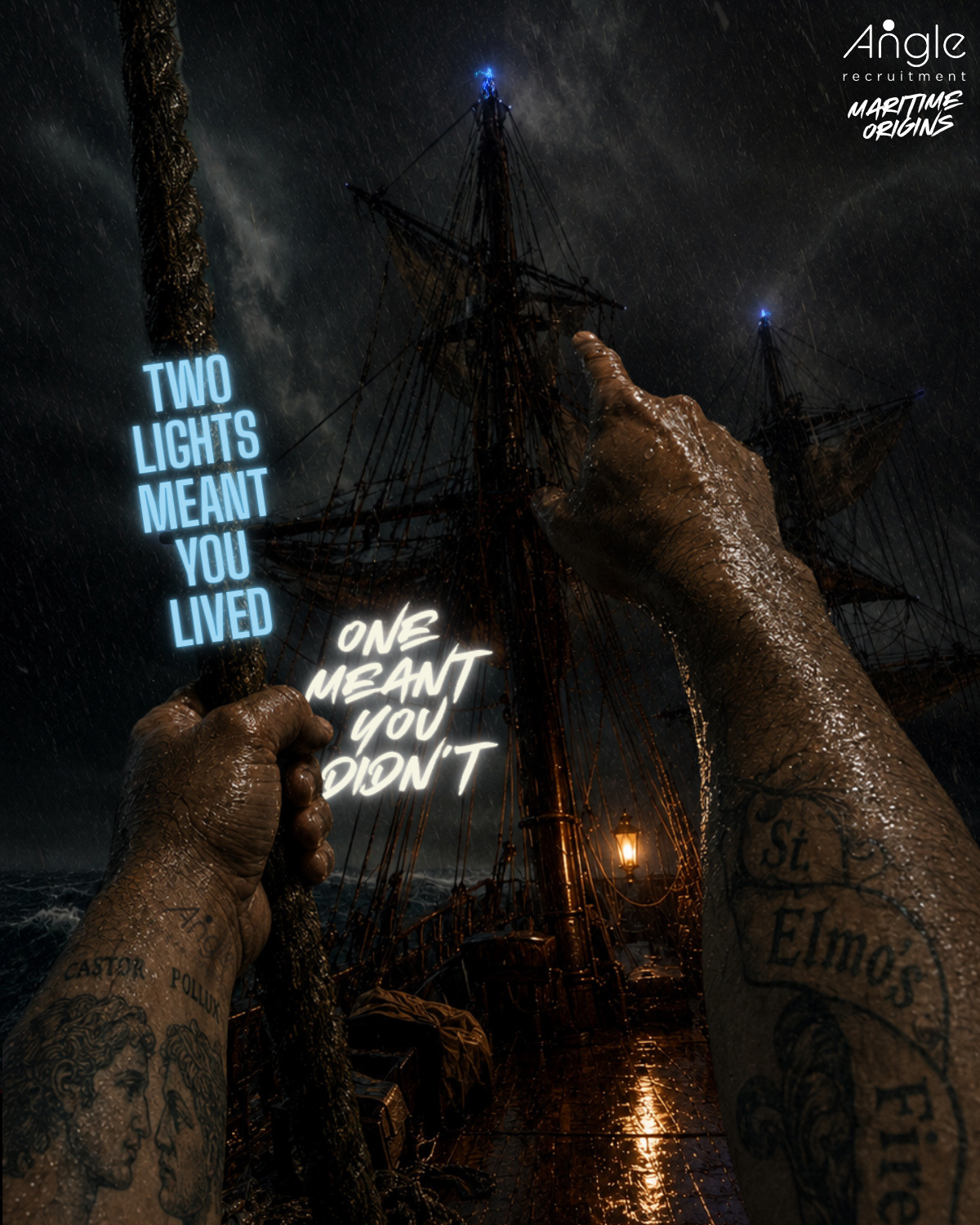
The mast glows blue. No heat, no flame, just tension in the air. Once a sign from the gods, now called St Elmo’s Fire. Still enough to unsettle any crew.

After the Benlomond sank in 1942, Poon Lim spent 133 days alone on a life raft, surviving through ingenuity, resourcefulness and extraordinary determination.
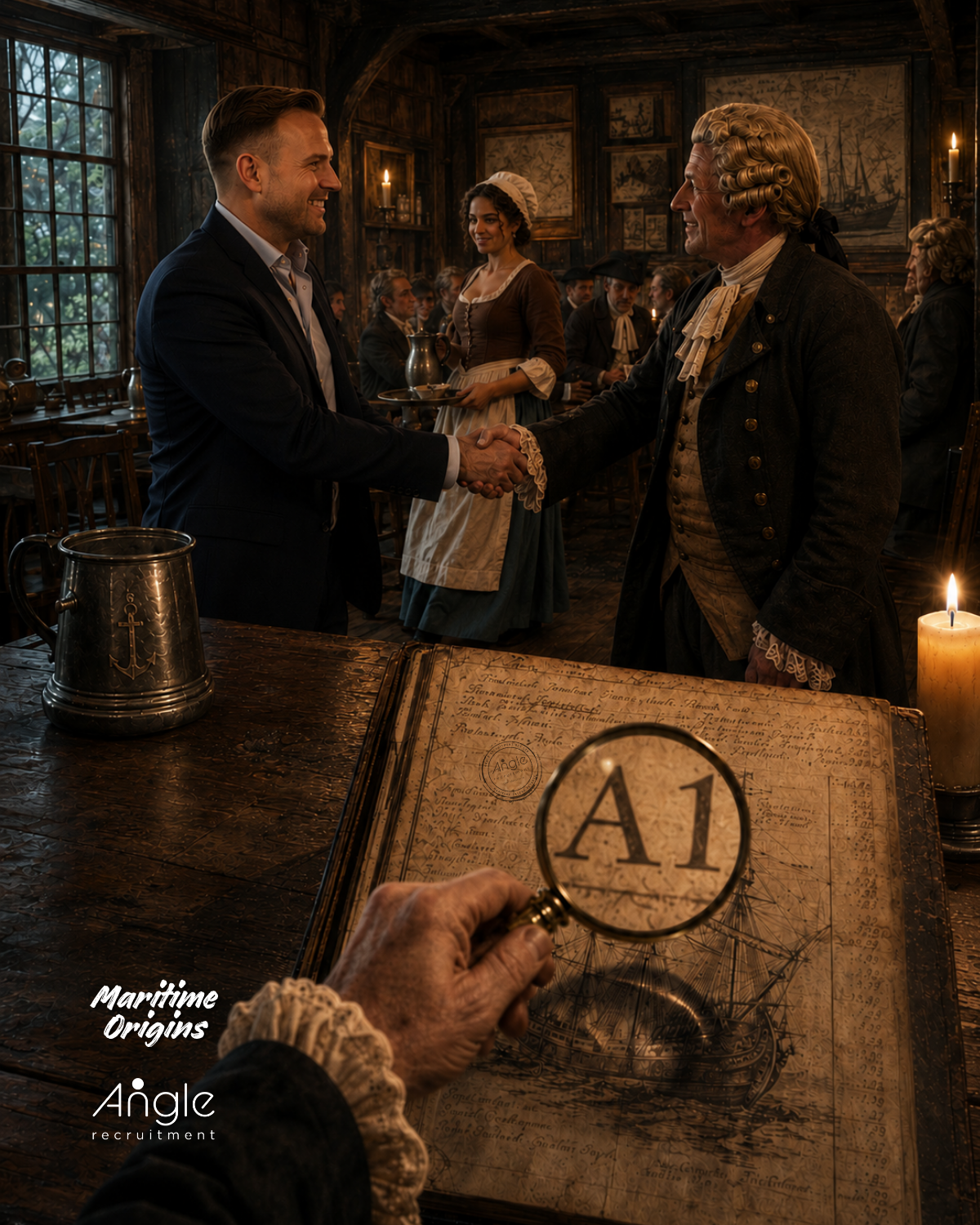
A1 wasn't always a boast, it started as a ship survey at Lloyd's coffee house in the 1680s. Discover how two characters became shorthand for the best today.