


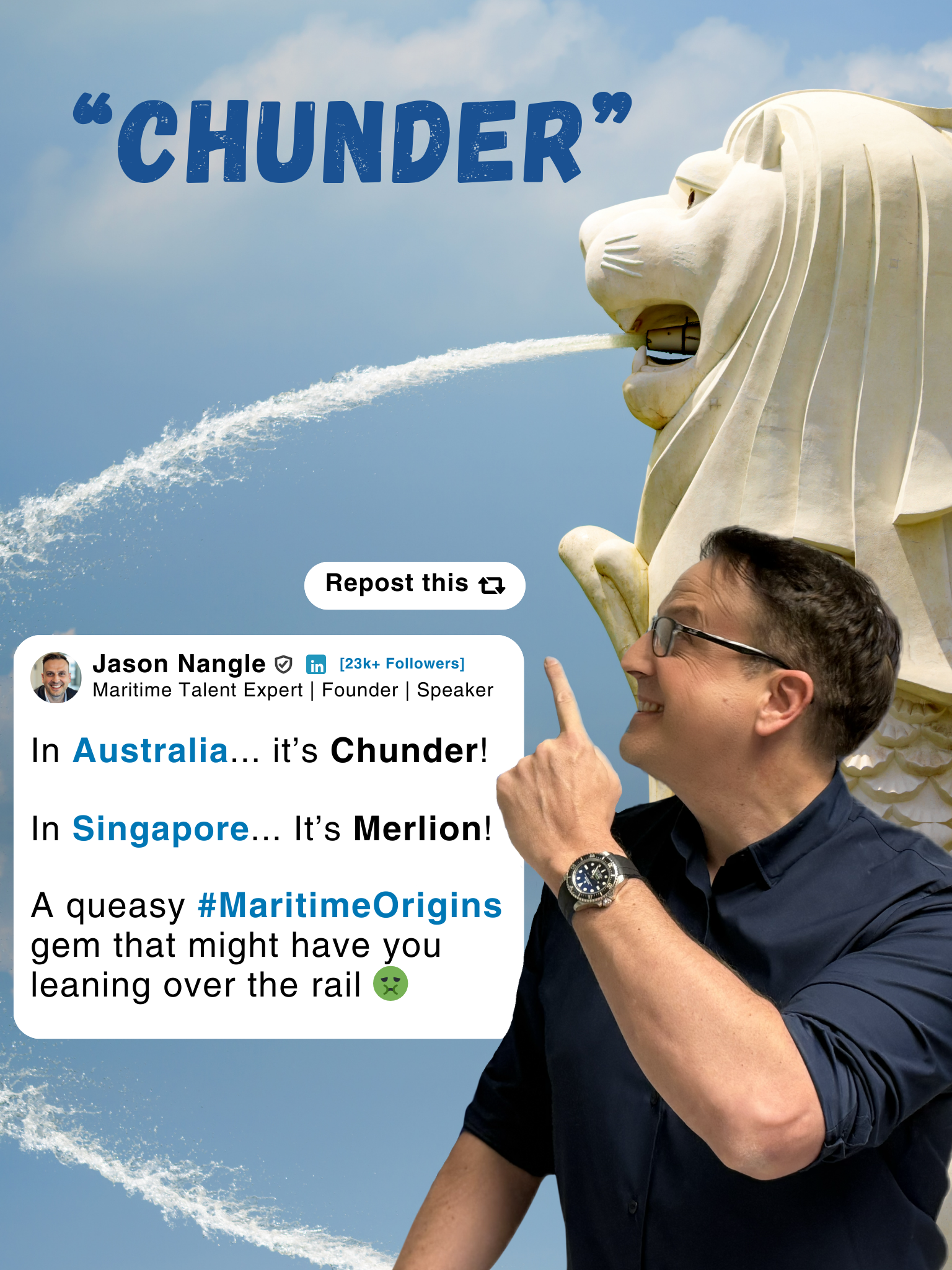
Chunder 🤢
I was nineteen, in my
trackie dacks, sitting in the officers’ bar at 2am when everyone’s beer suddenly started sliding towards me.
Half cut in forty-foot waves, and it’s going off like a
frog in a sock.
Carnage – the kind only the sea can deliver.
The
sanga I’d eaten earlier made a surprise reappearance… and tried to change ownership mid-voyage.
An Aussie classic:Chunder.
And that story’s
fair dinkum…
But where did it come from?
It all began with sea-sick sailors leaning over the side of ships during long voyages.
To avoid splattering the poor soul below, they’d shout:
“Watch under!”
A warning that, thanks to big swells and bad accents 😜, eventually slurred into…
“Chunder!”
Fast forward a century, and it’s now a beloved part of
Straya slang – describing the not-so-glamorous moment when your lunch stages a comeback.
I do love how Singaporeans refer to the iconic Merlion statue in the same light 🤣.
Fun Facts
⚓️ “Chunder” went global thanks to Barry McKenzie
The word was popularised in the 1970s through the Aussie character Barry McKenzie.
“Technicolour yawn” got a run too… not sure which is worse.
⚓️ The ancient Greeks blamed Poseidon.
Modern science blames sensory conflict between your eyes and inner ear.
The word
nausea itself comes from the Greek word for ship - which tells you everything about how long humans have been
feeling groggy at sea.
The Maritime Origins Series
Maritime Origins is a storytelling series created by Jason Nangle, Founder of Angle Recruitment, a global maritime recruitment and executive search firm.
The series explores the fascinating history behind everyday phrases that originated at sea, as well as the remarkable stories, traditions and characters that have shaped maritime culture.
Many sayings still used today were first spoken by sailors navigating the challenges of life on board ships. Alongside these phrase origins, the series also highlights lesser-known maritime stories, legends and historical moments from the world of shipping.
Through short stories and visual posts, Maritime Origins connects the language, heritage and traditions of seafarers with the modern maritime industry.
New posts in the series launch every Tuesday on LinkedIn and are then shared across other platforms including Instagram, YouTube, TikTok and X. Follow
Jason Nangle on LinkedIn and Angle Recruitment across your preferred social platforms.
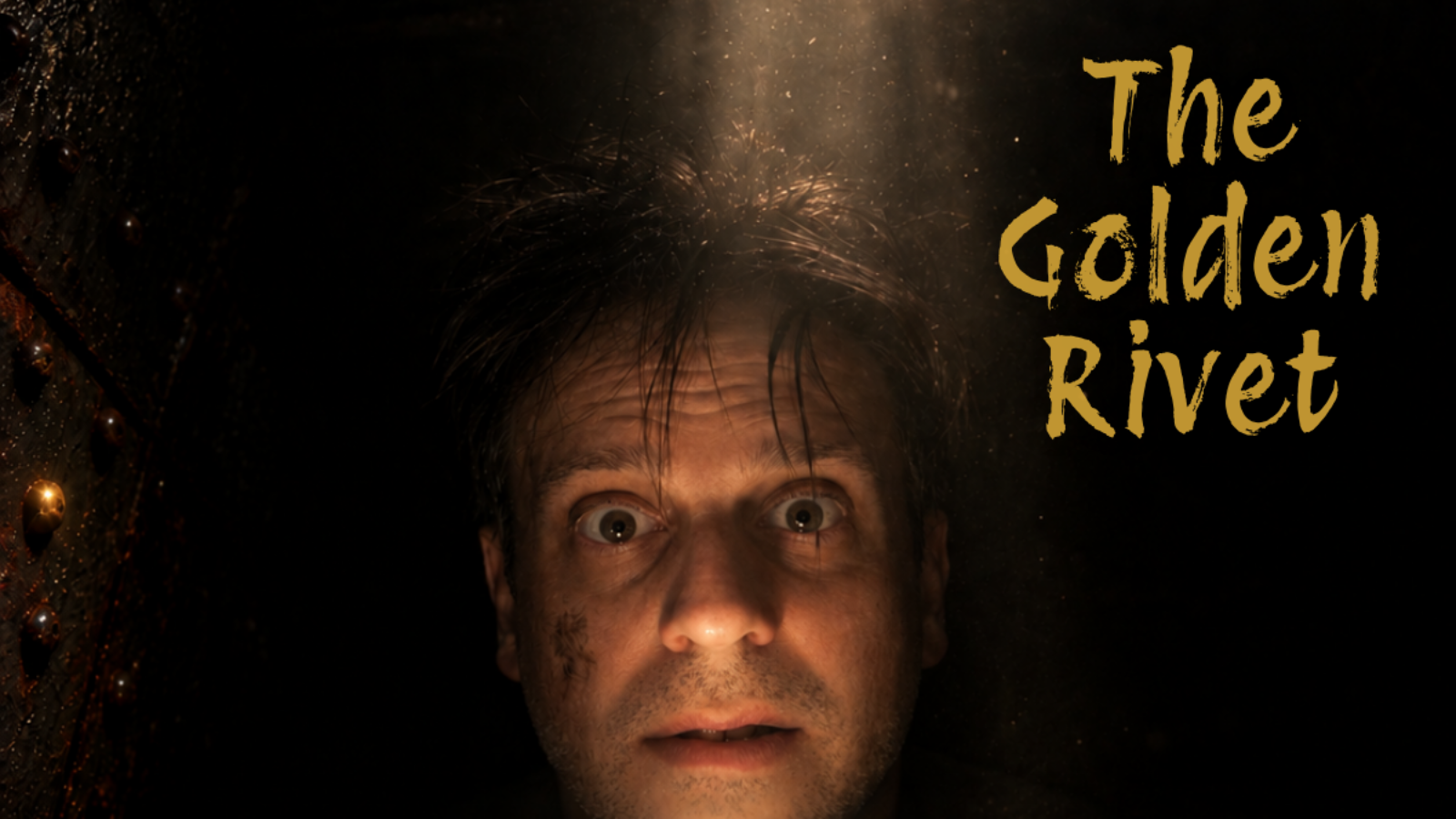
The golden rivet: the shipyard wind up that sent every new hand into the bilges, the Royal Navy's ruder version, and the hidden talent recruiters actually find.
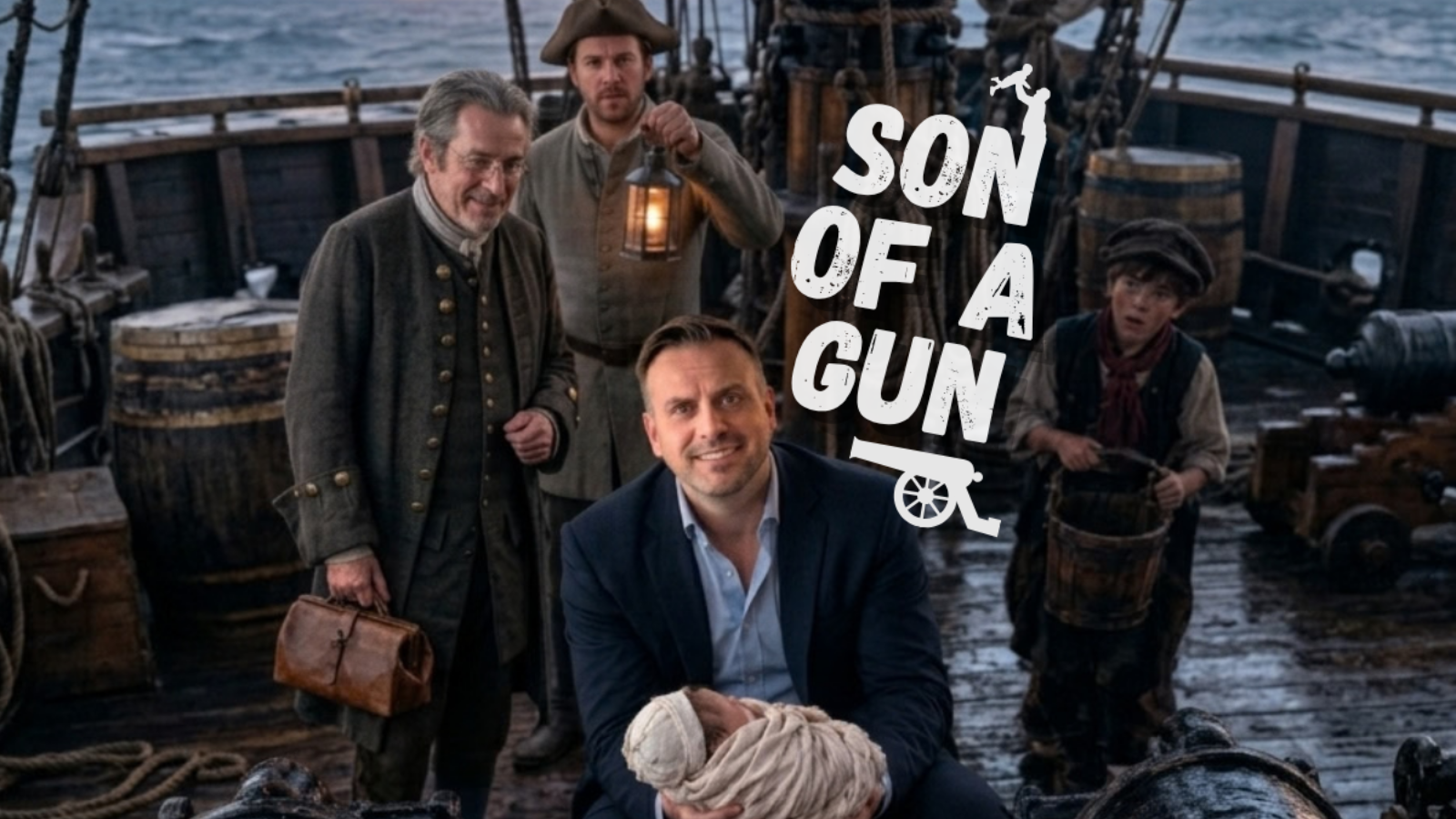
Where "son of a gun" really comes from: babies born between the cannons on Royal Navy gun decks. The history, the fun facts and why it now means grit.
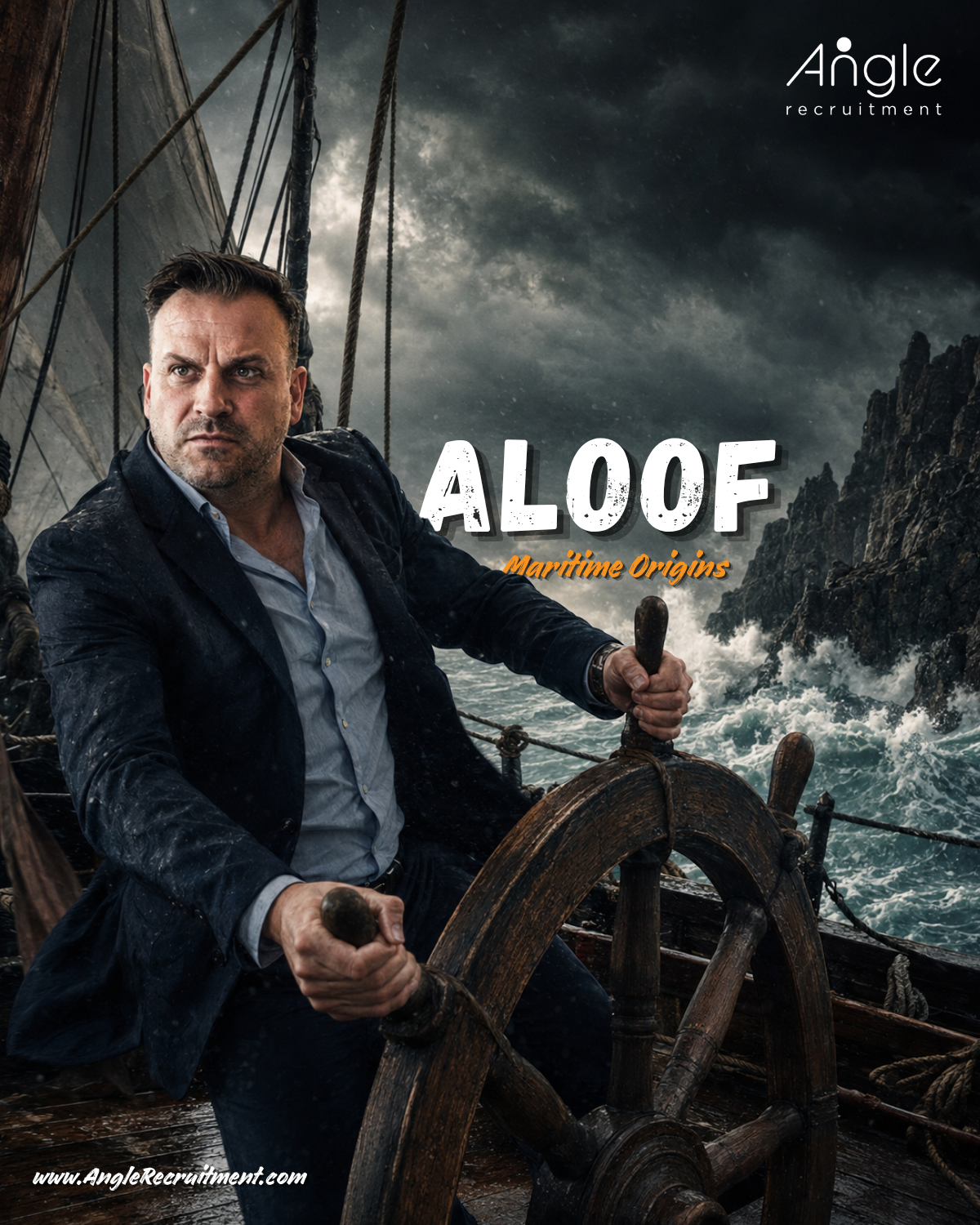
Aloof began as a Tudor helm order to keep a ship's head to windward and clear of a lee shore. How a lifesaving steer became a snub. Maritime Origins.